
Nowadays, the most effective TVs for gaming aren’t a lot totally different from the most effective TVs you should purchase as an entire. However should you’re hoping to make your PlayStation 5 or Xbox Sequence X video games look their finest, there are a couple of key options to bear in mind. That will help you get probably the most out of your front room setup, we’ve damaged down a couple of ideas for purchasing an excellent gaming TV and picked out a couple of well-reviewed choices from throughout the value spectrum.
What to search for in a gaming TV
Whether or not you utilize it for gaming or not, all good TVs are constructed on the identical foundations. You desire a 4K decision, sufficient brightness to beat glare, a comparatively excessive distinction ratio with deep and uniform black tones, broad viewing angles and colours that discover the correct steadiness between accuracy and saturation. For video video games particularly, the perfect TV has a 120Hz refresh fee (or greater), VRR assist, minimal enter lag and quick movement response, with no blur or different undesirable artifacts behind quick-moving objects. In fact, discovering a set that does all of this effectively and suits into your funds will be difficult.
OLED and LCD
For now, high OLED TVs usually provide the most effective image high quality for gaming or in any other case. However good OLED units normally value greater than their LCD counterparts, and a few fashions might not get vivid sufficient for many who have their TV set in a very vivid room.
Extra particularly, trendy OLED TVs might make the most of various kinds of OLED show tech: WOLED (i.e., “White OLED”) or the newer QD-OLED. We received’t dig too deep into how the two diverge in panel composition and subpixel construction, however the simplified model is that QD-OLED shows use a layer of quantum dots (therefore the “QD”) to ship a wider gamut of extra vibrant colours than conventional WOLED units.
This doesn’t imply all QD-OLED TVs are inherently higher: How effectively a person set performs is extra vital than the panel it makes use of, and a few premium WOLED TVs just like the LG G5 use a brand new “four-stack” structure to enhance shade purity and brightness. (Different fashions have used a show tech referred to as Micro Lens Array (MLA) to significantly enhance brightness as effectively.) Sure WOLED TVs may additionally deal with reflections higher or retain deeper black tones in a vivid room. And both manner, just about all OLED TVs share the identical core strengths.
When you go for an LCD TV — whether or not to avoid wasting money or stick in room with poor gentle management — a sophisticated backlight with smaller and extra exact mini LEDs and efficient full-array local dimming will normally enhance distinction and lighting element. Many of those TVs, together with some budget-level fashions, additionally use quantum dots to boost colours (and are labeled as “QLED” TVs). They normally aren’t as vivid or quick in movement as the highest OLED units, however they’re typically brighter and extra inexpensive, and the most effective can nonetheless produce a wonderful picture in their very own proper.
HDMI 2.1
To get probably the most out of a PlayStation 5 or Xbox Sequence X/S, your TV ought to have full HDMI 2.1 assist. This replace to the HDMI spec allows the next most bandwidth — 48 gigabits per second, up from HDMI 2.0’s 18 Gbps — and a handful of options which might be helpful for gaming efficiency particularly. These embrace variable refresh fee (VRR) and automated low latency mode (ALLM), which we element additional beneath.
Past that, maybe the chief perk of HDMI 2.1 is its capacity to transmit sharp 4K video as much as a 120Hz refresh fee with trendy consoles just like the PS5 and Xbox Sequence X, or as much as 144Hz with a strong gaming PC. Not each PS5 or Xbox Series X/S sport helps body charges that prime — and a few solely do at decrease resolutions — however those who do will feel and look particularly fluid in movement. HDMI 2.1 additionally consists of assist for Enhanced Audio Return Channel (eARC), which lets you cross higher-quality lossless audio from a supply system linked to the TV to a suitable soundbar or receiver.
The extra full HDMI 2.1 ports your TV has, the higher. “Full” is the important thing phrase there. As reported by TFT Central, as a result of HDMI 2.1 is backwards suitable with HDMI 2.0, TV and monitor producers have been allowed to model HDMI ports as “HDMI 2.1” even when they lack full (or any) assist for the spec’s upgraded options. We advocate a couple of TVs beneath which have true HDMI 2.1 ports, however should you’re shopping for a brand new TV for gaming, make certain your chosen set isn’t making an attempt to cover any capabilities you might take into account important.
Whereas HDMI 2.1 is the most recent and biggest at the moment, it’s value noting that the HDMI Discussion board officially revealed a brand new HDMI 2.2 spec at CES 2025. This replace guarantees a larger most bandwidth of 96 Gbps, which ought to technically allow even greater refresh charges and resolutions. It may additionally assist scale back hiccups in audio and video syncing (i.e., annoying lip-sync errors). If historical past is any indication, although, we’re nonetheless a bit away from HDMI 2.2 ports showing on TVs you may really purchase. Even then, the one individuals who may benefit from the theoretical resolutions and refresh charges allowed by the spec are those that join a super-powerful gaming PC to their TV. However this might at all times change with regardless of the subsequent PlayStation and Xbox consoles deliver.
HDR — Excessive Dynamic Vary
HDR refers to a TV’s capacity to show a wider vary between the darkest and brightest elements of an image. This could deliver out particulars that may in any other case be lacking on a normal dynamic vary (SDR) TV, in each the very darkish and (particularly) very vivid areas of a picture. HDR sometimes comes with an enchancment to paint copy as effectively, displaying a bigger palette of extra vibrant colours that brings content material nearer to its creator’s authentic imaginative and prescient.
To get an HDR image, you want each content material that’s mastered to benefit from the tech and a TV able to displaying that content material. HDR additionally is available in quite a lot of codecs, that are usually cut up between those who make the most of static metadata (e.g., HDR10) and those who make the most of dynamic metadata (e.g., HDR10+, Dolby Imaginative and prescient). In brief, the latter permits a TV to optimize its brightness and colours on a per-scene and even per-frame foundation, whereas the previous makes use of one set of optimized settings for everything of the given content material. Help for these codecs can differ relying on the TV, content material and sport console you utilize. The Xbox Sequence X and S, for instance, assist Dolby Vision for gaming, whereas the PS5 doesn’t.
The excellent news is that almost all TVs you’d purchase at the moment are HDR-ready in some vogue, even on the funds finish of the market. The catch is that some TVs are significantly better at getting probably the most out of HDR than others. The identical goes for precise content material mastered in HDR. With video video games particularly, there aren’t fairly as many titles designed to benefit from HDR as there are films (although the quantity is rising on a regular basis), and the variance in HDR high quality tends to be wider.
HGiG — HDR Gaming Curiosity Group
HGiG is actually a set of requirements for gaming in HDR. It stands for the HDR Gaming Interest Group. Sony and Microsoft are each members, as are many TV makers and sport builders. What this implies is that, ideally, all of the teams talk info so that you could begin up a brand new sport on a console or PC and have it robotically acknowledge your show. As soon as that occurs, the sport can modify its settings to that show’s capabilities and provide the finest image high quality potential, with out dropping particulars within the brightest or darkest areas of the display. For instance, daylight on the finish of a darkish tunnel might painting a brightly lit surroundings as an alternative of trying like an overexposed white blob.
This can be a good factor, however the actuality is a little more sophisticated. Not all TVs spotlight HGiG compatibility of their settings menu, whereas just some PlayStation and Xbox video games acknowledge and comply with the rules. If an HGiG choice is listed in your TV’s tone mapping settings, you must flip it on previous to operating the console’s HDR settings. Then, should you’re taking part in a sport that helps HDR and HGiG, you ought to be in good condition with out having to regulate the assorted luminance ranges once more. Nonetheless, how all of this appears to you would possibly differ relying in your TV and the sport you’re taking part in. Use no matter settings you suppose look finest.
ALLM — Auto Low Latency Mode
ALLM lets a suitable supply (like your PS5 or Xbox) inform your show to change into an image mode that reduces lag between receiving every body of a picture and displaying it on the TV. This cuts out further processing that may very well be the milliseconds of distinction between touchdown a exact enter or not. Put one other manner, it lets your TV robotically allow its “Recreation” mode when it detects that you’ve got launched a sport. A very good trendy TV can do that with out forcing you to enter any menus, then change again if you’d relatively watch a film or TV present.
VRR — Variable Refresh Fee
VRR ought to sound acquainted to most avid gamers at this level. Many gamers have skilled slowdown, display tearing or stuttering as a system struggles to render every body on the goal pace, which is mostly 60 or 30 fps on a TV. With VRR, every little thing stays in sync: Your show will not present the subsequent body till it is prepared, which may make issues really feel smoother and extra responsive, even when the system fails to ship on its goal body fee.
There are a couple of totally different implementations of VRR obtainable, together with Nvidia’s G-Sync, AMD’s FreeSync and the HDMI Discussion board’s VRR spec, which is a part of the complete HDMI 2.1 normal. Each a TV and an enter system must assist the identical VRR tech for it to work, and totally different gadgets might solely assist VRR inside a particular refresh fee window. On a 120Hz show, for example, the PS5’s VRR solely works between 48Hz and 120Hz.
As a reminder, the PS5 officially supports HDMI Discussion board VRR, the Xbox Sequence X and S assist HDMI Discussion board VRR and FreeSync, whereas gaming PCs might assist G-Sync or FreeSync relying on whether or not they use a Nvidia or AMD graphics card. An ideal gaming TV helps all the massive VRR codecs, however lacking, say, G-Sync, isn’t a killer should you solely sport on a PS5 or Xbox.
8K (You do not want it)
One factor you don’t want to fret about is 8K assist. Though the PS5 and Xbox Sequence X are theoretically able to outputting 8K video, virtually no video games are made for that decision, and 8K’s sensible advantages are extremely minimal until you intend on sitting unreasonably shut to an enormous TV. The few 8K TVs in the marketplace are normally very expensive as effectively.
Good gaming TVs you will get proper now
Whereas we at Engadget don’t formally overview TVs, we’ve researched the market and rounded up a couple of units which have been broadly well-received by different skilled overview websites we belief, together with Rtings, Wirecutter, Reviewed, PCMag and others.
Remember the fact that there’s by no means a perfect time to purchase a brand new TV. Costs for at the moment’s fashions are at all times dropping, and subsequent yr’s upgrades are at all times simply across the nook. So should you see an 2024 model of one of many suggestions beneath at a deep low cost, which may be a greater worth.
Display screen sizes: 42″, 48″, 55″, 65″, 77″, 83″ | Show kind: WOLED | Decision: 4K | Most refresh fee: 144Hz | HDR codecs: Dolby Imaginative and prescient, HDR10, HLG | HDMI ports: 4x HDMI 2.1 | VRR: HDMI Discussion board VRR, FreeSync, G-Sync licensed | Good OS: webOS | Display screen kind: Flat | ALLM: Sure | TV tuner: ATSC 1.0
The ticks many of the requisite bins for an excellent gaming TV, in response to . Its very good OLED panel produces the form of deep distinction, tremendous low enter lag, clear movement and broad viewing angles anticipated from an excellent OLED set. Whereas it doesn’t have a QD-OLED display just like the — and thus can’t produce the identical degree of vibrant colours — reviewers that it may possibly really get brighter with non-HDR content material and that its black tones keep darker in a vivid room.
The system consists of 4 full HDMI 2.1 ports, all of which may play 4K video at a most refresh fee of 144Hz, and it really works with the massive three VRR codecs. It additionally helps ALLM and, not like all Samsung TVs, Dolby Imaginative and prescient HDR. The latter is a pleasant bonus for Xbox gamers particularly. LG’s webOS software program will present you adverts, in the meantime, but it surely additionally consists of built-in assist for cloud providers like Xbox Recreation Go and NVIDIA GeForce Now.
It’s nonetheless value mentioning the Samsung S90F, as that set is commonly obtainable across the identical worth and consists of lots of the identical advantages whereas pumping out bolder colours. It will get brighter when each TVs are set to their respective Recreation Modes as effectively. When you see it on sale for much less, don’t care about Dolby Imaginative and prescient and wish the higher colours of a QD-OLED show, be happy to get it as an alternative.
However you should be sure you get the correct one — solely the 55-, 65- and 77-inch variations really use a QD-OLED panel in North America. The opposite sizes use a WOLED show, which form of defeats the purpose. Internationally, the excellence between fashions is even much less clear. This form of panel mixing is simply unhealthy kind on Samsung’s half. That stated, the 42- and 48-inch variations of the C5 lack a number of the brightness boosting tech of the bigger fashions, so LG isn’t completely harmless both.
When you have additional cash to burn, the and are primarily the higher-end variations of the C5 and S90, respectively. They’re brighter, higher at warding off glare and so they assist as much as a 165Hz refresh fee for PC gaming. The S95F has a matte coating over the show, which makes it particularly able to decreasing reflections. However they’re each costly, with their 55-inch fashions priced at $2,000 or greater as of our newest replace.
- Incredible distinction with deep black tones
- Low enter lag and clear movement
- 4 HDMI 2.1 ports
- Obtainable in sizes as much as 83 inches
- Not as color-rich as high QD-OLED TVs
- Constructed-in audio system may very well be higher

TCL
Display screen sizes: 55″, 65″, 75″, 85″, 98″, 115″ | Show kind: QLED with mini-LED backlight | Decision: 4K | Most refresh fee: 144Hz (288Hz at 1080p) | HDR codecs: Dolby Imaginative and prescient, HDR10, HDR10+, HLG | HDMI ports: 2x HDMI 2.1, 2x HDMI 2.0 | VRR: HDMI Discussion board VRR, FreeSync, G-Sync suitable | Good OS: Google TV | Display screen kind: Flat | ALLM: Sure | TV tuner: ATSC 1.0
When you can’t spend fairly a lot for an OLED TV, the TCL QM7K is a pleasant midrange various with a mini LED backlight. It’s not a greater gaming TV than some pricier LCD units in a vacuum, because it doesn’t have absolutely the brightest show, it solely consists of two full HDMI 2.1 ports and its image will look considerably washed out should you don’t view it straight on. You’ll wish to tinker with the default image settings to get probably the most out of it, too.
However reviewers suggest that it’ll play nice in a vivid or darkish room, with spectacular distinction and colours for the cash, low sufficient enter lag in its “Recreation Grasp” mode and assist for all the primary HDR and VRR applied sciences. It will possibly play as much as 144Hz in 4K or — for the extra aggressive gamers on the market — as quick as 288Hz in 1080p. (The latter falls to 240Hz with the 55-inch mannequin.) It runs on the wonderful Google TV platform on high of that, and it makes use of one among its non-HDMI 2.1 ports as its eARC connector — when you have a number of consoles, which means you may hook a soundbar as much as the TV with out having to disconnect a gaming system from a 2.1 port first. You’re nonetheless giving up the near-perfect distinction and clean movement of an excellent OLED set, however for tons of of {dollars} much less, the QM7K ought to do effectively sufficient.
- Stable worth
- Spectacular distinction for the value
- 144Hz panel with VRR and 1080p @ 288Hz assist
- Worse distinction and colours than OLED TVs
- Solely two HDMI 2.1 ports
- Mediocre viewing angles

TCL
Display screen sizes: 55″, 65″, 75″, 85″, 98″ | Show kind: QLED with mini-LED backlight | Decision: 4K | Most refresh fee: 144Hz (288Hz at 1080p) | HDR codecs: Dolby Imaginative and prescient, HDR10, HDR10+, HLG | HDMI ports: 2x HDMI 2.1, 2x HDMI 2.0 | VRR: HDMI Discussion board VRR, FreeSync, G-Sync suitable | Good OS: Google TV | Display screen kind: Flat | ALLM: Sure | TV tuner: ATSC 1.0
On the funds finish, the TCL QM6K is widely regarded as one of the year’s better TV bargains. You must nonetheless get the QM7K if potential, as evaluations recommend that its distinction, brightness and shade quantity are superior throughout the board. The cheaper mannequin isn’t any higher with viewing angles or avoiding direct gentle, both. So don’t count on a showstopping picture.
However for a TV that’s typically priced beneath $500 for a 55-inch set, the QM6K ought to maintain its personal for the typical viewer (particularly in the event that they don’t care about HDR). Its listing of gaming options is surprisingly equal as effectively: You continue to get a 144Hz refresh fee with the power to go as much as 288Hz at 1080p, a pair of HDMI 2.1 ports (neither of which is an eARC port), ALLM, equally low enter lag in its sport mode and assist for the most important VRR codecs. If cash’s tight otherwise you’re simply searching for a less expensive second TV to stay upstairs, there’s worth right here.
- 144Hz panel with VRR and 1080p @ 288Hz assist
- Low enter lag
- Decently inexpensive
- Not vivid sufficient for high quality HDR efficiency
- Muted colours in comparison with pricier choices
- Mediocre viewing angles
Richard Lawler contributed to a earlier model of this report.
Trending Merchandise

Thermaltake V250 Motherboard Sync ARGB ATX Mid-Tower Chassis with 3 120mm 5V Addressable RGB Fan + 1 Black 120mm Rear Fan Pre-Put in CA-1Q5-00M1WN-00
Dell KM3322W Keyboard and Mouse
Sceptre Curved 24-inch Gaming Monitor 1080p R1500 98% sRGB HDMI x2 VGA Build-in Speakers, VESA Wall Mount Machine Black (C248W-1920RN Series)
HP 27h Full HD Monitor – Diagonal – IPS Panel & 75Hz Refresh Fee – Clean Display – 3-Sided Micro-Edge Bezel – 100mm Top/Tilt Modify – Constructed-in Twin Audio system – for Hybrid Staff,black
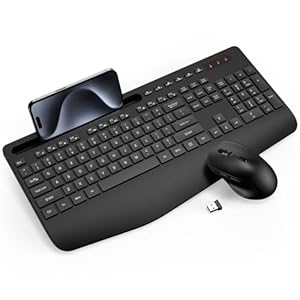
Wireless Keyboard and Mouse Combo – Full-Sized Ergonomic Keyboard with Wrist Rest, Phone Holder, Sleep Mode, Silent 2.4GHz Cordless Keyboard Mouse Combo for Computer, Laptop, PC, Mac, Windows -Trueque








&url=https://todaybargainfinds.com/product/sceptre-curved-24-inch-gaming-monitor-1080p-r1500-98-srgb-hdmi-x2-vga-build-in-speakers-vesa-wall-mount-machine-black-c248w-1920rn-series/&media=https://m.media-amazon.com/images/I/51qY+4ZLC9L._SS1024_.jpg)


